A template per kind of thing
Items need rarity and a description. Spells need level, range and duration. Monsters need armor class, hit points, attacks. Make a template for each, with its own columns, and keep them all in one game.
| Field | What it’s for |
|---|---|
| Name | What it is |
| Type Line | Wondrous item, 3rd-level spell, beast |
| Rarity | Your own column |
| Effect Text | What it does |
| Range, Duration | Your own columns, for spells |
| AC, HP | Your own columns, for monsters |
| Art | Upload your own |
Tall cards hold more
RPG cards are often wordy. Tarot size gives you room for a stat block, and poker size suits short items and fits sleeves.
At the table, or online
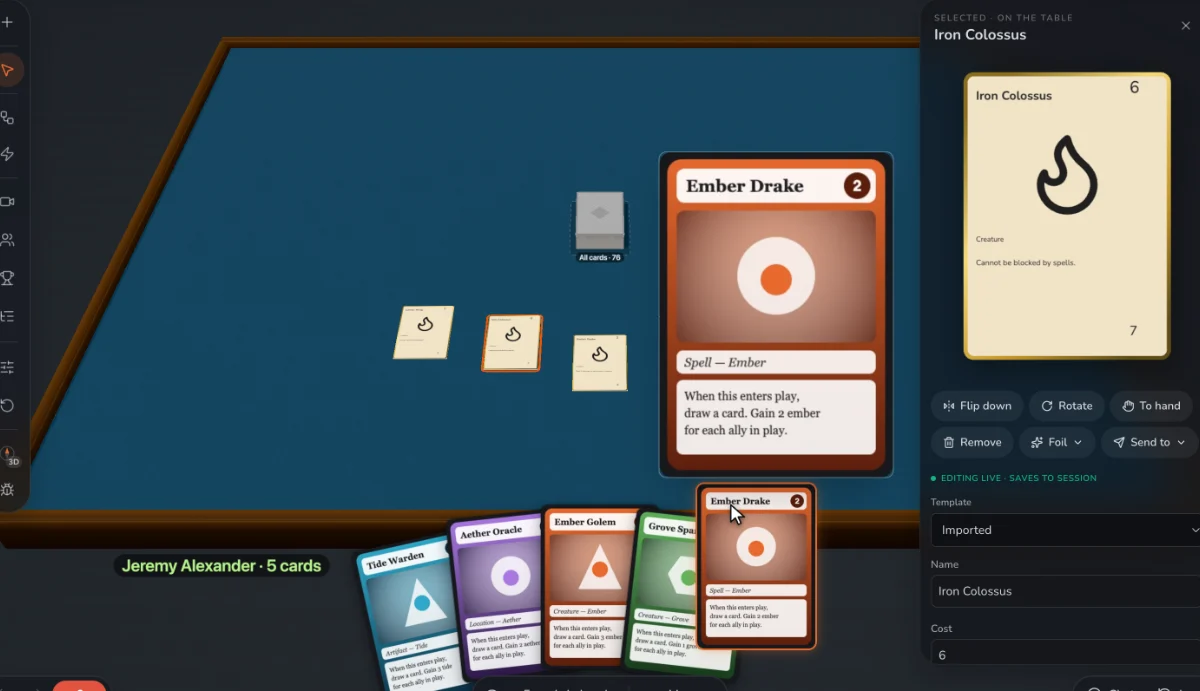
Print cards with cut guides, or put them on a shared table: a hand of hidden loot for each player, a mat for your map with a square or hex grid, tokens for monsters and dice from d4 to d20. For a full virtual tabletop with character sheets and fog of war, Roll20 and Foundry are built for that. This is for the cards.
Step by step
- Start from the sample. The item and monster template has a sheet ready.
- Adjust the columns. Keep only what your game uses.
- Lay out the templates. One for items, one for monsters.
- Print or deal. A PDF for Saturday, or a table link for the online group.
Questions
Can I use official monster stats?
Keep official text and art private, for your own table. Use your own art and writing for anything you publish.
Can players keep cards hidden?
Yes. Each player has a private hand, and others see only how many they hold.
Prototable isn’t affiliated with Wizards of the Coast. These pages are about making your own original cards in a familiar layout. Use your own names, art and text, and check the rules before you sell anything that borrows from someone else’s game.
Related: D&D-style card template · Tarot card size · Print and play · all tools.